The Hush Is the Hook: America’s Listening Rooms Get Loud About Silence
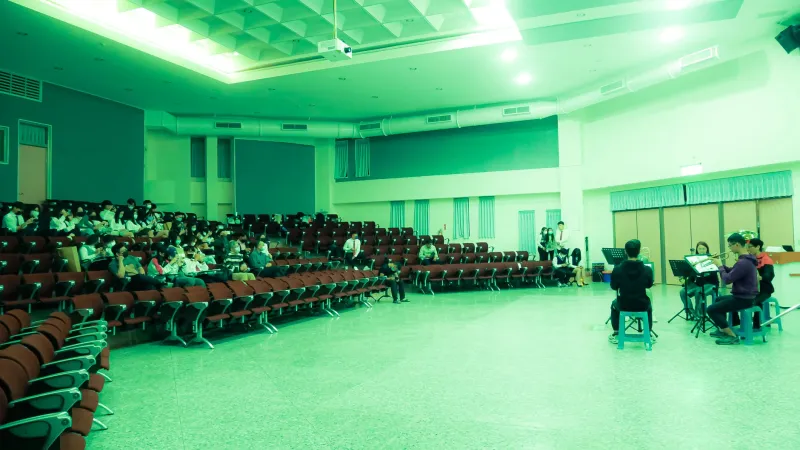
On a Thursday night in Brooklyn this fall, the loudest thing in the room was the HVAC. Then the house lights went down, the door closed with a soft thud, and 120 people sat perfectly still while a singer stepped away from the mic for the last verse. No phones. No clinking glasses. No one yelling “woo” at the worst possible moment. Just a room doing the thing rooms are supposed to do: carrying sound from one human to another.
Welcome to the 2026 listening-room boom. It is part acoustics, part etiquette, part economics. Across the U.S.—Austin, Chicago, Portland, Nashville, Los Angeles, Denver—artists and bookers are converting churches, black-box theaters, record shops, and back rooms into seated spaces where the audience is not a backdrop for a night out. The audience is the point.
The room is the instrument
“A listening room is not a club with chairs,” says Mara Voss, a Brooklyn sound designer who has tuned three small venues in the past two years. “It’s a different contract. You’re telling the audience the details matter. Then the room has to deliver the details.”
That means treating acoustics as infrastructure, not decoration. Voss talks about low-frequency build-up, early reflections, and whether the HVAC rumble sits under the vocal. She also talks about cheaper fixes: heavy curtains, carpet, a borrowed riser, moving the bar away from the stage. Some rooms hire acoustic consultants. Some just learn where the dead spots are after a dozen shows.
Bookers say the demand is coming from both sides. Artists want to play rooms where dynamics survive. Fans want to hear songs without paying for a nightclub they didn’t ask for. In Chicago, booker Devin Okafor programs a 150-cap room that asks guests to pouch their phones. He says the first year felt like a gimmick to some people. The second year felt like a waitlist.
“We’re not anti-fun,” Okafor says. “We’re pro-attention. There’s a difference. People talk about phone-free like it’s a punishment. It’s actually a relief for a lot of ticket buyers.”
Is this demand, or just marketing?
Both. That’s the honest answer.
There is real audience appetite in certain markets and certain genres: folk, jazz, ambient, singer-songwriter, contemporary classical, and the growing middle ground of artists whose shows depend on storytelling. There are also rooms slapping “listening room” on a poster because it sounds premium. A phone pouch does not fix a bad PA. A candle on the bar does not fix a room where the espresso machine runs during the quiet song.
And not every city can sustain this. In markets where late-night standing shows still sell out, seated rooms are a supplement, not a replacement. The smart operators are not claiming a national revolution. They’re building a room that works for a specific kind of show, then booking accordingly.
The 2026 version of this trend is less about luxury and more about clarity. Ticket prices vary wildly. Some rooms run subscription models. Some do early shows and matinees. Some serve drinks; some don’t. The common thread is a promise: we will protect the listening experience, and you will behave like a person who came to listen.
That promise only works if the stagecraft matches it.
What it means for sound, story, and stagecraft
If you’re an artist who relies on dynamics, a listening room can feel like a promotion. If you rely on a wall of volume and a screen behind you, it can feel like a test.
The first adjustment is volume discipline. In a tuned room, you do not need to push the system to fill the space. You need to trust the room. That often means reworking arrangements: fewer layers, more space, a quieter bridge, a vocal that doesn’t have to fight a snare.
The second adjustment is visual restraint. Screens can work, but they compete with attention. In a listening room, lighting and movement do more than projection. A single lamp. A shift from front to side. A story told between songs without apologizing for it.
The third adjustment is pacing. Silence is not dead air. It’s a room breathing. Artists who rush to fill every gap with banter are fighting the very thing the venue is selling.
A practical checklist for performers
Before you book the room, ask for the boring details. Then rehearse for the room you’re actually playing.
- Ask what the room’s sound system is, who runs it, and whether there’s a house engineer. “We have a PA” is not an answer.
- Request a soundcheck with the house at show volume, not empty-room volume. Bodies absorb sound. So do expectations.
- Test your quietest song first. If you can’t hear the words, neither can the back row.
- Bring arrangements that can shrink. A listening room rewards dynamics more than brute force.
- Prepare a short spoken intro that sets the rules without scolding the audience. One sentence is enough.
- Decide where merch lives and when you’ll mention it. Do not turn the last ten minutes into a checkout aisle.
- Watch your monitor mix. In a quiet room, a muddy monitor makes you sing louder than the song needs.
- If you use phones onstage for lyrics or samples, say so. The audience will notice the irony.
- Leave room for one unamplified or minimally amplified moment if it fits the show. It doesn’t have to be a stunt. It just has to be honest.
- Talk to the booker after the show. Ask what worked and what distracted. Rooms get better when artists treat them like collaborators.
The quiet part isn’t silence for its own sake. It’s permission. Permission for the audience to stop performing attention and actually pay it. In 2026, the rooms that get this right are not selling nostalgia for some lost pre-smartphone utopia. They’re selling a simple, increasingly rare pleasure: a song, a story, and a room that lets both land.