The Second Arrangement: How Front-of-House Engineers Write the Show You Hear

Photo: Sergei Prokudin-Gorskii, Public domain, via Wikimedia Commons
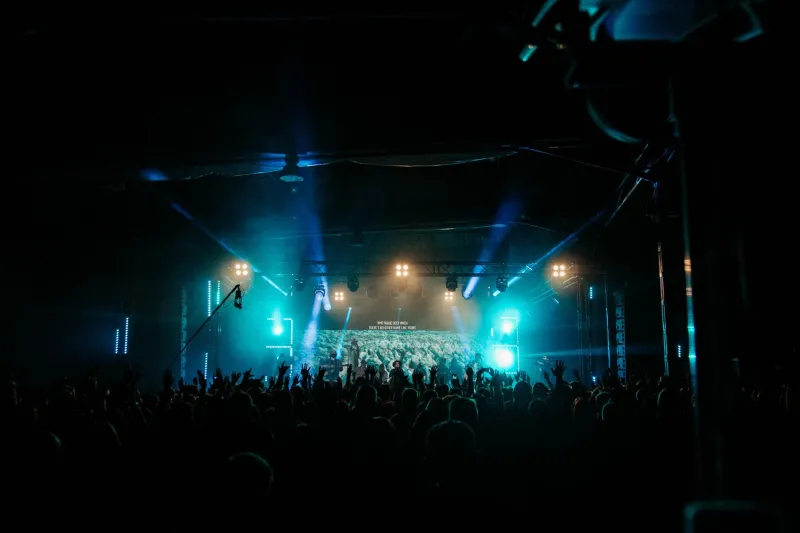
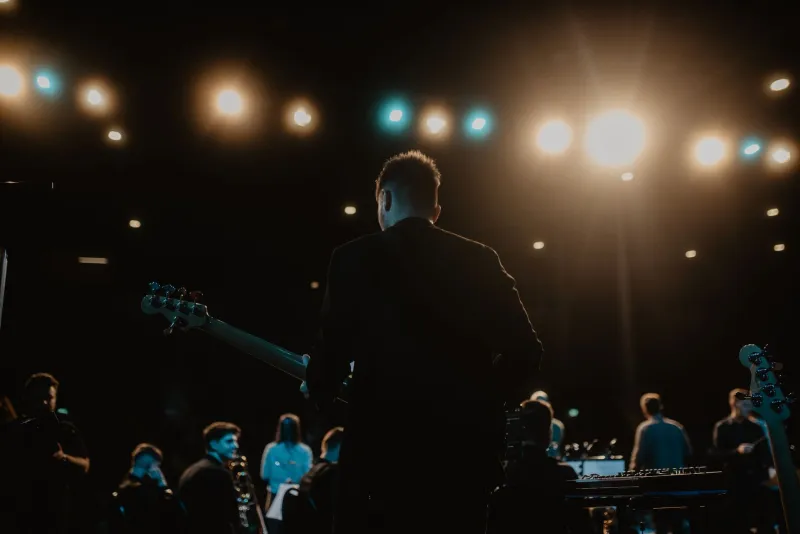
The front-of-house engineer is usually the last person the audience thinks about and the first person who decides what the audience actually hears. The artist writes the songs. The band arranges them. The lighting designer gives them a shape. But at the board, someone is making a second arrangement in real time—one that exists only for that room, that crowd, that night.
That work is easy to miss because good live sound often feels like no sound at all. When it goes right, the mix disappears into the performance. When it goes wrong, everyone suddenly becomes a critic. The engineer is either invisible or blamed. Rarely are they credited as a co-author of the show.
The Board Is a Writing Desk
A setlist tells you the order. It doesn’t tell you what the room will feel. A front-of-house engineer has to translate a band’s intent—its dynamics, its texture, its emotional weather—through a PA system that may be terrific, tired, or held together with gaffer tape and prayer. The job is not to make everything louder. It’s to make the right things matter.
“You’re not fixing the band,” one touring engineer told me between load-in and soundcheck at a 900-cap room in the Midwest. “You’re deciding which version of the band the room gets.” That version might favor the vocal, or the low end, or the snare’s crack. It might tuck the guitars during a quiet verse so the chorus can open up. None of those choices are neutral. They’re editorial.
Translating the Record Into the Room
The recorded version of a song has a fixed frame. The live version has to breathe in a space with its own architecture, its own resonant frequencies, its own crowd noise. A mix that works in a low-ceilinged club in Brooklyn can turn to mud in a converted warehouse in Austin. The engineer is constantly re-writing the same song for a different container.
“The record has a fixed frame,” says a house engineer at a 300-cap room in Chicago. “Live, the frame moves. You have to decide what the song is about before you decide what the PA is doing.”
That means asking questions that sound more like dramaturgy than technical support: Where is the climax? Which instrument carries the tension? When the singer steps back from the mic, is that a moment of intimacy or a cue for the band to swell? The answers change from set to set. A touring engineer might mix the same twelve songs fifty times in a year and never make the same choices twice.
The Arc Is in the Faders
Audiences remember arcs, not averages. A show that stays at one volume, one density, one emotional temperature becomes background music with a cover charge. The engineer’s job is to protect the contrast—the hush before the bridge, the low end that arrives like weather, the vocal that suddenly sits dry and close in the middle of a wide, washy mix.
That kind of storytelling requires trust between artist and engineer. Some bands hand over a setlist and a reference playlist. Others send voice memos from the van. The best working relationships tend to include a shared vocabulary for moments: “Make this one feel like a room,” “Don’t let the second verse get too big,” “Save the sub for the last chorus.” Those notes are not technical specs. They’re stage directions.
What Small Rooms Can Steal From the Road
Not every venue has a dedicated engineer, and not every emerging artist can afford to bring one. But the principles of soundcraft-as-storytelling scale down. A few practical habits can make a small US room feel more intentional without a bigger budget.
- Advance the room, not just the set. Ask about the PA, the room’s problem frequencies, and whether there’s a house engineer. A five-minute conversation before load-in can save a whole soundcheck.
- Bring a reference track. One song that captures the vibe you want—not necessarily your own—can communicate more than a paragraph of adjectives.
- Write a cue sheet for dynamics. Note where the set should feel small, where it should open up, and which songs need vocal clarity over volume. Give it to the engineer if there is one.
- Protect the vocal. In small rooms, intelligibility beats impact. If the audience can’t hear the words, they can’t follow the story.
- Treat the soundcheck as a rehearsal for the mix. Run the transitions, not just the songs. The moments between songs are part of the arrangement too.
- Don’t mix with your eyes. The engineer’s job is to listen. If the board looks “right” but the room feels flat, the room wins.
Soundcraft Is Not Cleanup
The old model treats live sound like a janitorial service: make it clean, make it loud, make it not feedback. The better model treats it as authorship. The engineer is not there to erase the band’s rough edges. They’re there to decide which rough edges the room gets to feel.
That shift in perspective matters most in small venues, where the distance between artist and audience is short and the stakes are intimate. A 200-cap room can’t hide behind spectacle. The mix is the spectacle. When it’s built with narrative intent—when the engineer knows where the story turns—the show lands differently. The audience may not know who shaped it. They’ll just know they were there.
At Mileece, that’s the kind of stagecraft we keep listening for: the invisible hand at the board, writing the second arrangement in real time.