Before the First Chord: How Backstage Rituals Become Tour Lore
At a sold-out club in Tulsa, the most revealing moment of the night might happen forty minutes before doors. A singer runs the same three notes over and over, not because the melody is hard, but because the room needs a body in it before it needs a song. A tour manager tapes a handwritten setlist to a flight case. Someone's phone is propped against a coffee cup, capturing room tone, a laugh, the squeak of a sneaker. That is the green-room tape. And in 2026, it is becoming part of the show.
This is not the old backstage clip dump. The artists doing it well are not posting everything. They are editing. They are sequencing. They are treating the pre-show ritual as a small release with its own rhythm, its own sound, and its own boundaries. That distinction matters. Intimacy on camera is easy. Intimacy with intention is a craft.
The Green-Room Tape Is Not a Dump
The appeal is obvious. Fans want the world around the songs. They want the vocal warm-up that explains why the chorus landed, the setlist draft with two songs crossed out, the playlist that got the band from the van to the stage. But a folder of raw clips is not storytelling. It is surveillance with better lighting.
The artists who get this right think like release-makers. They choose one ritual and follow it. Maybe it is the five minutes of silence before walk-on. Maybe it is the ritual of tuning the same guitar while the house music fades. Maybe it is the pre-show playlist, which can become a standalone audio artifact with a short liner note. The point is not to prove access. The point is to frame access.
At Mileece, we keep coming back to the same idea: sound, story, and stagecraft from the artist's edge. The backstage tape sits right at that edge. It is sound before the song. It is story before the set. It is stagecraft with the lights still half up.
Build a World, Not a Walk-Through
There is a real fear that backstage content kills mystery. It can, if the camera explains too much. A tour is a world, and worlds need shadow. The best green-room tapes leave gaps. They show the ritual but not the whole routine. They let a fragment imply a larger life.
That is especially useful for US indie artists touring rooms in Austin, Portland, Brooklyn, or Asheville, where the audience is close enough to feel the seams. Fans do not need a full documentary about load-in. They need a recurring motif. The same candle on the amp. The same battered notebook. The same warm-up phrase. Over a run of dates, those details become lore. They tell the audience: this is not a random set of shows. This is a season with its own weather.
Restraint also protects the artist. Not every backstage moment belongs on the record. A green-room tape should be consented to, edited with care, and built around what the artist is willing to give. The mystery is not a marketing trick. It is a boundary. And boundaries make the invitation mean something.
A Practical Tape Kit for Indie Tours
Start small. Pick one keeper ritual per tour and capture it consistently. Three angles are plenty: a wide shot of the room, a close detail, and an audio-first moment. Resist the urge to film everything. A twenty-to-forty-second clip with strong room tone will outlive a ten-minute montage.
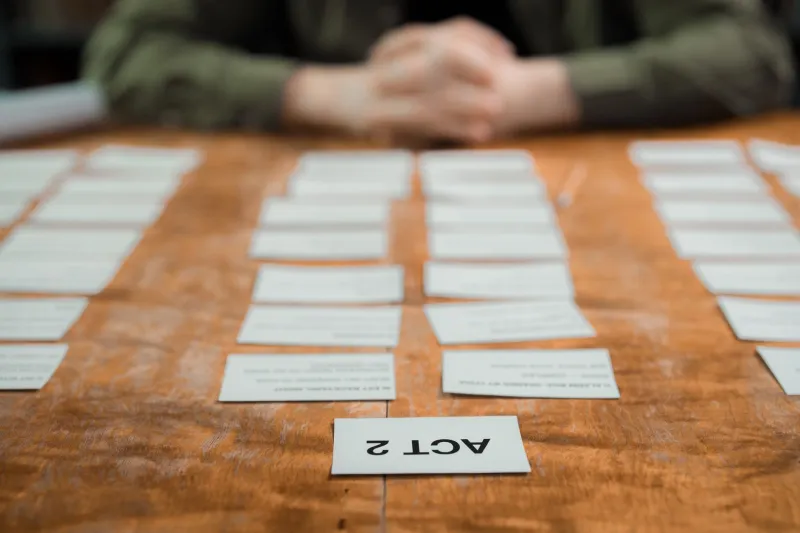
Then treat the edit like a song. Find the opening image. Find the turn. Find the landing. If the tape is meant to accompany a tour, sequence it around the setlist. Maybe the warm-up clip pairs with the opener. The setlist draft pairs with the song that got cut. The pre-show playlist becomes a companion piece fans can actually use.
Release cadence matters too. A green-room tape does not have to be a daily series. It can be a short film before the tour, a mid-run drop, or a post-tour artifact that makes the whole thing feel complete. A little scarcity goes a long way. The audience should feel like they got a key, not a floor plan.
The Craft Is in the Cut
Editing is where the ritual becomes a story. Keep the imperfect sounds that place the listener in the room: the hum of a fridge, the click of a case, the muffled soundcheck through a wall. Do not over-score it. Do not color-grade the life out of it. Captions help, but they should not explain the joke. The tape should feel found and framed, not produced into a commercial.
That is the balance. The green-room tape works when it feels like an artifact from a world that already exists. It fails when it feels like a press kit with a pulse. Fans can tell the difference. So can the artist.
What the Audience Actually Gets
The audience gets anticipation. They get a small, human before. They get to hear the breath behind the first chord. That does not spoil the show. It sharpens it. When the house lights finally go down, the ritual they saw backstage becomes a private cue they now share.
That is the real release. Not the footage itself, but the shift in attention. The show starts earlier than the downbeat. The green-room tape just lets us hear it begin.