Dramaturgy in Disguise: Why the Setlist Is the Real Script of the Night
A setlist can look like a list. Song, song, song, encore. But the best ones are not lists. They are scripts. They tell the audience when to lean in, when to breathe, when to move, and when to hold still. In 2026, as more artists sequence live shows with the care of an album, the setlist has become the most visible piece of authorial craft in the room. It is dramaturgy in disguise.
This is not a new idea, exactly. Artists have always shaped sets. But there is a difference between playing the hits in a workable order and building a night that has an arc. The first is logistics. The second is writing. And the second is what separates a good show from a show that stays with you.
The First Song Is a First Sentence
The opener is not a warm-up. It is a contract. It tells the room what kind of night this is going to be. A low drone and a single light can say more than a count-in. A cold open into the loudest song can work, but only if the rest of the set knows what to do with that energy.
Tour directors talk about this constantly. The first cue is not just the first chord. It is the walk-on, the house music fade, the moment the audience realizes the show has started. In US clubs and theaters, where the room itself changes from city to city, that cue has to be flexible. A theater in Chicago holds silence differently than a packed room in Los Angeles. The opener has to introduce the story without assuming the room already knows it.
That is why so many strong sets begin with a deliberate frame: a spoken line, a sustained note, a lighting state that feels like a chapter heading. The song is the sentence. The cue is the paragraph break before it.
Pacing Is Plot
A setlist has an inciting incident, escalation, a breath, a reveal, and a landing. Not every show needs all five, but the ones that feel flat usually skip the breath. They mistake intensity for structure. They stack the loud songs, then wonder why the last third feels like a treadmill.
The better approach is to think in blocks, not singles. What does the audience need after the third fast song? A change of texture. What does the room need before the emotional centerpiece? A transition that earns it. Lighting transitions help, but they are not decoration. They are punctuation. A blackout can be a question mark. A slow fade can be a comma. A full-bright hit can be an exclamation point, but only if the set has not been shouting for an hour.
This is where the album comparison gets useful. Albums have side turns, mood shifts, and sequencing tricks that keep a listener inside a world. Live shows can borrow that logic without becoming theatrical. The goal is not to make the concert precious. The goal is to make the sequence feel inevitable.
Transitions Are Chapters
Most setlists fail in the gaps. The songs are fine. The transitions are accidents. A long tuning break, a mumbled thank-you, a band shuffle that kills the momentum. But a transition can also be the most authored part of the night. A held drone under a song change. A stripped-back middle section where the singer steps away from the mic. A lighting cue that shifts the room from blue to amber before the next verse.
Practical takeaway: map the transitions before you map the songs. Ask what each gap is doing. Is it a breath? A threat? A reset? If the answer is nothing, cut it or fill it. Tour directors often build a setlist in two layers: the song sequence and the cue sequence. When those two layers disagree, the show feels restless even if the playing is tight.
US venue shows make this especially clear. A seated theater wants different transitions than a general-admission club. In a club, the audience can carry momentum through a pause. In a theater, a pause can either focus the room or lose it. The setlist has to know which room it is in, even as the shape stays the same.
The Encore Is an Ending, Not a Victory Lap
The encore is where setlists often stop being stories and become habits. The biggest song. The obvious singalong. The thank-you. That can work, but it can also feel like the night refusing to end rather than choosing to. A strong encore is an epilogue. It should answer something from the main set or leave a final image that the audience can carry out.
Sometimes the best ending is not the loudest song. It is the one that makes the room quiet enough to hear itself. That is a dramaturgical choice, not a commercial one. It says the artist knows what the story needs. It also trusts the audience to follow.
A Setlist Audit for the Tour
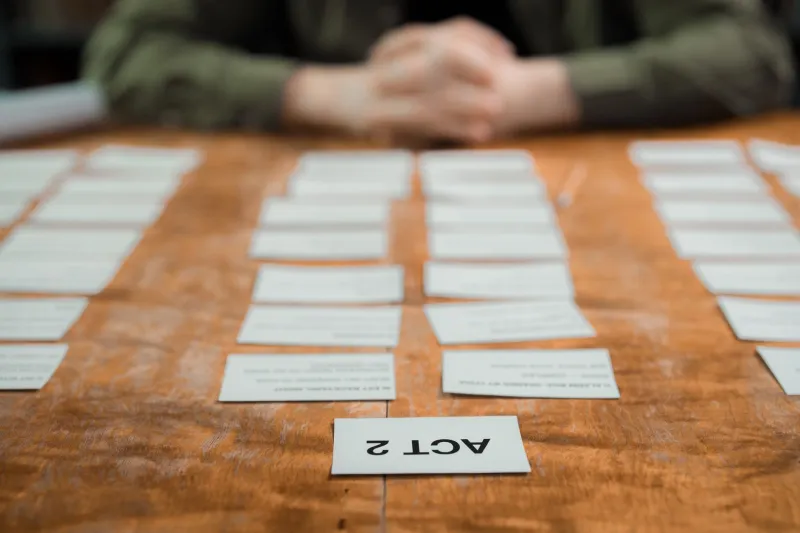
Before the next run, try a simple audit. Write the setlist as three acts, even if the audience never sees the labels. Mark the energy curve. Circle the transitions that are doing real work. Cut one song that exists only because it is expected. Then ask whether the final three songs land the story or just fill the slot before the lights come up.
The point is not to over-plan the night. Live shows need air. But a setlist is a form. It has an opening, a middle, and an ending. It has pacing, contrast, and a point of view. When artists treat it that way, the concert stops feeling like a playlist with a PA and starts feeling like a piece of writing you can stand inside.
That is the argument for setlist as dramaturgy. Not because every show needs a plot, but because every show is already telling one. The setlist is where the artist decides whether to tell it on purpose.