Dead Air, Live Wire: How Between-Song Talk Became Part of the Arrangement

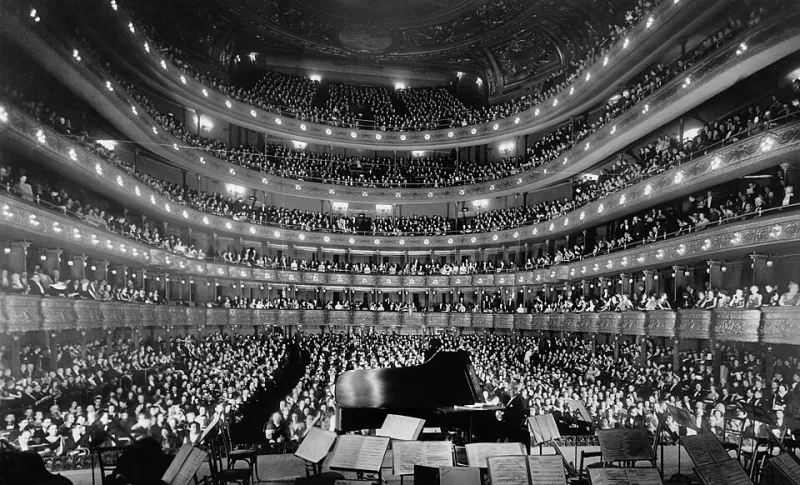
Photo: ROHSKI, CC BY 4.0, via Wikimedia Commons
There is a moment in a small club set when the song ends and the singer leans into the mic and says almost nothing. Maybe it is a thanks. Maybe it is a joke about the weather. Maybe it is a half-story about the drive into town that trails off before the punchline. The room either follows or it does not. That little pocket of talk is not dead air. It is a live wire, and more songwriters are treating it like one.
The old model of stage banter was simple: play a song, say something charming, play another song. But in 2026, as touring costs stay high and audiences have more ways to stay home, the between-song voice is doing more work. It is pacing the night. It is giving the crowd a breather after a heavy song. It is establishing the artist as a person rather than a playlist with a guitar. And when it is bad, it is not just awkward — it can flatten a room that was already leaning in.
The Banter Map
A lot of artists do not write a script. They write a map. The map marks emotional waypoints: open with a quick hello, introduce the band after the second song, tell the story about the song that needs context, leave room for the room to respond. The exact words change from night to night. The shape does not.
That shape matters most in rooms with different social physics. A 200-cap club in Columbus or Austin can handle a looser, faster delivery. People are close together, the bar is nearby, and the crowd is already part of the show. A seated theater in Chicago or Boston asks for a different volume. The same story that gets a laugh over a clinking bar might land with a thud under a proscenium. The banter has to be arranged for the room, not just repeated at it.
One useful trick is to think in transitions. A song ending on a quiet note does not want a loud joke after it. A song that ends in a wall of noise can handle a quick thank-you and a count-in. The talk is the bridge between two moods, and a bridge that ignores the key change will sound wrong even if every word is true.
Persona Is a Tone, Not a Character
Stage banter is where a lot of artists accidentally invent a character. The character might be the wry road dog, the nervous storyteller, the deadpan minimalists. That can work, but only if it stays close to the songs. When the talk sounds like a different person than the lyrics, the room feels the seam.
The better approach is tone. A songwriter who writes sparse, careful songs does not need to become a stand-up comic between them. They need to find the spoken version of the same voice: a little dry, a little understated, comfortable with a pause. A songwriter who writes big, rowdy songs can be bigger in the talk, too. The second instrument should be in the same band as the first.
This is where trust gets built. A crowd will forgive a missed note. It will forgive a forgotten lyric. It is harder to forgive the feeling that the person onstage is performing a version of themselves they do not believe in. The between-song voice is one of the few unscripted places left in a show. Used well, it says: this is who is playing for you tonight.
The Edit Is the Performance
Most artists do not edit their banter. They should. Record the set. Listen back on the drive. Notice which story got a laugh and which one got a polite silence. Notice where the talk ran long and the room's attention started to drift. Notice the sentence that felt true onstage and sounds like a bit in the morning.
The edit is not about killing spontaneity. It is about removing the stuff that does not earn its place. A useful rule: if a piece of talk does not set up the next song, reset the room, or reveal something the songs cannot, it is probably a candidate for the cut. That does not mean every word has to be functional. A good aside can be pure texture. But texture is different from filler.
Artists who tour theaters often learn this faster because the room is less forgiving. In a club, the bar noise covers a lot. In a theater, a 40-second detour about parking can feel like a 40-minute detour. The talk has to be tighter, but it does not have to be colder. The best theater banter often feels like a lowered voice, not a smaller personality.
Call-and-Response Without a Chorus
Crowd work is its own instrument, and it is easy to overplay. Asking a room to sing along before it knows the song can backfire. Asking a room to shout something can feel like a forced bit if the setup is not there. The safer move is to leave openings rather than commands. A question. A pause. A local reference that gives the crowd something to claim.
Local references are a classic for a reason. A mention of the venue, the neighborhood, the weather, or the drive in can make a touring show feel less like a drop-in. But there is a line between warmth and pandering. The reference has to be real enough to land. If the artist is reading it off a setlist, the room can tell.
The same goes for stories about the songs. A short, specific note about where a song came from can open the song up. A long, meandering origin story can close it down before it starts. The between-song voice is not a liner note. It is a doorway. Keep it open long enough for people to walk through.
A Checklist for Turning Dead Air Into Stagecraft
- Map the transitions, not the script. Know which songs need a reset, which need a setup, and which need silence.
- Write the first and last line of each talk break. Improvise the middle.
- Put a time limit on stories. Twenty to thirty seconds is usually enough in a club. Theater can handle a little more, but only if the room is with you.
- Rehearse the silence. A pause after a joke or a heavy song is part of the arrangement.
- Record and review. Cut one story that is not working. Keep one that is.
- Prepare a recovery line for when a joke dies. A simple 'Anyway, this next one is in a different key' can be more charming than a save.
- Watch the room, not the setlist. The second instrument is played by ear.
The point is not to turn every artist into a monologist. The point is to stop treating the space between songs as empty. A set is not just a sequence of songs. It is a sequence of moments, and the voice in between is one of them. When it is working, the crowd does not notice the craft. They just notice that they are following. That is what a second instrument is for.