Half-Bright, Wholehearted: The House-Light Cue Nobody Credits
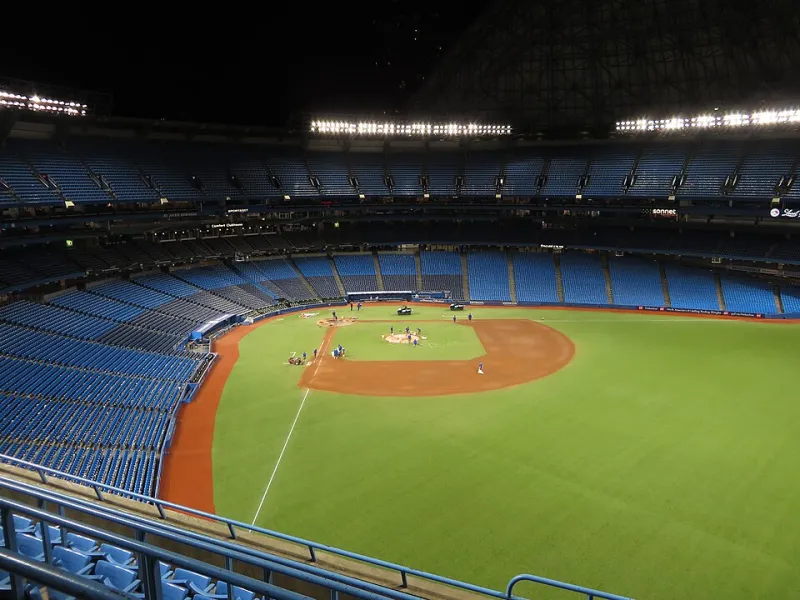
Photo: Ken Lund from Reno, Nevada, USA, CC BY-SA 2.0, via Wikimedia Commons
There's a fader in every venue that does more dramaturgical work than the entire moving-light rig, and it's almost never on the advance. It's the house-light dial. It's the cue that tells a room whether to talk or listen, whether to stand or sit, whether the night is over or just pausing to breathe.
We spend a lot of ink on spotlights, haze, and the color of the wash. But the plain white overheads — the ones that let you find your seat, read the merch table, and see the face of the person next to you — are the quiet narrators. They set the terms of the evening before a single note lands. And in 2026, as American rooms finish swapping out decades-old incandescent houselights for LED retrofits, designers and artists are discovering that the simplest cue in the building is also the hardest to get right.
Work Lights Are the Overture
Before doors, house lights sit at full — 100 percent, flat, unromantic. That's not a lighting state; that's a chore. Crews are taping cable paths, wiping down railings, restocking the bar. The brightness is functional, and audiences never see it.
Then, somewhere between soundcheck and doors, a house electrician or the venue's production manager walks to a wall panel and brings the room down to a preset — often 60, 50, sometimes 40 percent. That single move is the real overture. It tells the audience, before the opener's intro tape, that the room has shifted register.
"You can watch a crowd change posture when the houselights come down the first notch," says a house LD who works a 1,200-cap room in the Midwest and has dimmed the same preset for eleven years. "Shoulders drop. Voices get quieter. People stop shouting across the floor. It's not the music doing that yet. It's the light."
In rooms that skip that step — the ones that stay at full until the band walks on — audiences tend to stay chatty well into the first song. The room hasn't been told to listen yet.
The Half-Bright Compromise
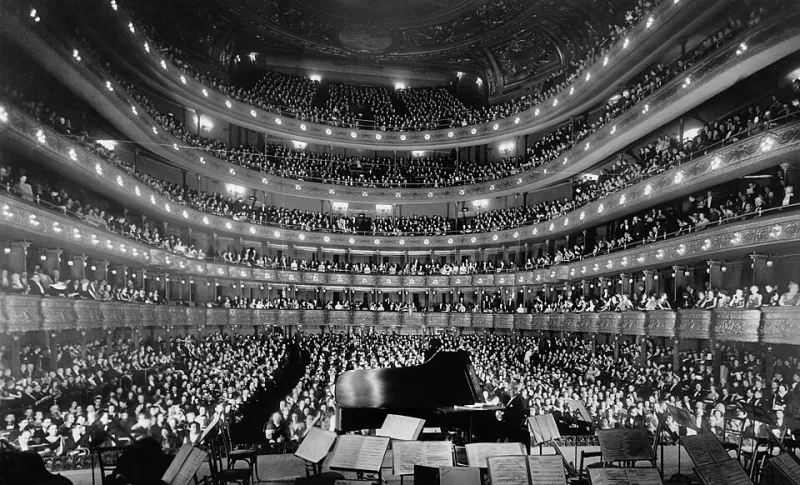
The cue most discussed backstage, though, is the one before the encore. Full blackout feels dramatic for about four seconds and then starts to feel like a fire drill. People pull out phones. Someone near the bar shouts something. The spell thins out.
So a lot of designers have settled on a half-bright state: somewhere between 25 and 40 percent, warm, aimed at the floor and the aisles rather than the stage. Enough to see your neighbor's face and find the exit. Not enough to break the mood.
"Half-bright is a conversation cue," says a touring lighting designer based in Portland who has run house-light states for arena support slots and 300-cap clubs on the same tour. "It says, 'We're still in this together, but the song is over for now.' Full darkness says, 'You're on your own.' Those are two very different messages to send 8,000 people at once."
Some artists build the half-bright lift into their show file and call it themselves. Others hand the cue to the venue, which is where things get interesting.
When the Room Reads the Dial
Audiences are extremely literal readers of brightness. At full, they treat the space like a lobby. At half, they lean in. At near-dark, they get reverent — or restless, depending on the room and the genre.
Comedians figured this out years ago; the good ones ask for a specific house state and check it during soundcheck. Singer-songwriters in listening rooms have started doing the same. A folk act playing a 400-cap room in Cleveland will often ask for a 30 percent house state during the quiet block of the set, because the alternative — pitch black — makes audiences feel like they're at a séance rather than a show.
There's a practical edge, too. Egress code and common sense both require that audiences can find their way out. A well-shaped house-light cue isn't a compromise with safety; it's how safety and atmosphere get to coexist. The trick is aim — wash the floorboards and the aisles, keep the stage face in shadow, and let the spill do the emotional work.
LED Rewrote the Curve
The old incandescent house rig had a slow, forgiving dimmer curve. Push the fader and the room eased down like a sunset. The LED retrofits that have swept through US venues over the past few years are brighter, cooler, and — until recently — prone to a hard snap at the bottom of the fade.
Designers have been pushing manufacturers for warm-dim and dim-to-black behavior, and the newer fixtures are much better. But the change has forced a re-learning. A preset that read as "intimate" on the old rig can read as "hospital corridor" on a fresh LED array if the color temperature isn't dialed in.
Some houses now keep a warm gel or a dedicated low-output wash just for the pre-show and encore states, separate from the working rig. It's a small line item that buys a lot of atmosphere.
The Cue Nobody Puts in the Rider
Here's the unglamorous truth: house lights are usually run by whoever is closest to the panel. In a lot of clubs, that's a barback with a walkie-talkie or the house electrician watching the show from the side of the room. In bigger rooms it's the house LD, often working from a preset list the touring production never sees.
When the cue goes wrong — the room snaps to full too early, or drifts bright during the quiet song — nobody puts it in a review, but everybody feels it. The night gets a little less cohesive and nobody can say exactly why.
Some touring artists have started adding a single line to the advance: "House-light states: doors, top of set, encore, post-show." It costs nothing and prevents the most common version of the problem, which is a venue defaulting to what it always does.
Blackout Is a Rookie Move
There's a school of thought that says the only real lighting state is darkness and everything else is a concession. That's a stage-craft opinion, not a rule. Darkness is a tool; it's not a personality.
The rooms that feel the most alive tend to be the ones that treat brightness as a continuum — a dimmer that goes up and down across the night, tracking the emotional shape of the set. Work lights, then a low warm wash, then blackout at the top, then a half-bright lift before the encore, then a slow climb to full as the last chord rings. That's a performance in its own right, and it's happening in every venue in America, whether anyone is calling it.
The house lights aren't the backdrop to the show. They're in the band. They just don't get a monitor mix.