The Invisible Bandmate: Inside the Playback Rig That Shapes the Show
Photo: Mithun Chakra-Chakraborty, CC0, via Wikimedia Commons
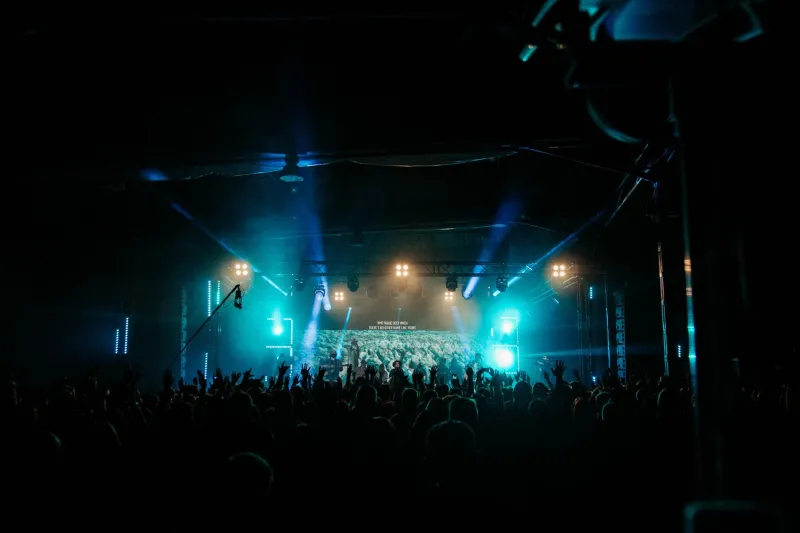
At a packed club show in Brooklyn this fall, the band looks like a band: guitars, drums, a keyboard, three voices. What the crowd does not see is the small rack stage left, blinking quietly through the set. It is running click, timecode, and a handful of backing elements that keep the lighting cues, video loops, and a few unplayable studio sounds locked to the same clock. The set feels loose. The rig is the reason it can.
That is the modern live show’s quiet arrangement. Playback is not a scandal or a shortcut. It is a production tool, and in 2026 it is shaping how artists decide what stays live, what gets reinforced, and what the audience is actually listening for when they judge authenticity.
The Rack Is Part of the Band
“People think it is either live or it is fake,” says Marisol Vega, a playback tech who has toured with indie acts through the U.S. club and festival circuit. “Most of the time it is neither. It is a bunch of small decisions made months before the show.”
Vega’s setup for a recent tour included redundant laptops, a backup interface, a MIDI controller, and a timecode feed that ran to the lighting desk. The click lived in the musicians’ in-ear monitors. Some songs carried a few synth pads and vocal stacks. Others were bare. The band rehearsed both ways so the show would not fall apart if the rig went down.
That redundancy is the unglamorous heart of playback work. A rig is not just a laptop with backing tracks. It is a system of failsafes, and every fail-safe costs money and rehearsal time. For a headliner with a production budget, that math is easy. For a rising act playing 300-cap rooms, it is a negotiation.
What Stays Live Is a Creative Decision
Dane Whitaker, who fronts a Portland-based indie rock project, started using playback for one reason: he wanted the recorded version of a song to survive the jump to stage. “We had a tape-loop texture and a little vocal countermelody that I could not recreate with four people,” he says. “For a while we just did not play the song live. Then we tried putting those parts on a track and keeping everything else raw.”
Whitaker says the audience response changed nothing. The drums were still loud. The guitars still wobbled. The track filled in a texture, not the performance. “The moment the track starts carrying the vocal or the rhythm,” he says, “you can feel the room get suspicious.”
That suspicion is not universal. In a listening room, fans may forgive a missed note but bristle at a perfectly timed backing vocal. At a festival, the same audience may want the bigger, brighter version. Playback does not erase authenticity. It moves the question. The artist has to decide where the human edge lives and protect it.
Lighting Gets Its Cue From the Same Clock
Timecode is where playback stops being just about sound. Priya Raman, a lighting designer who works with touring acts and one-off theater shows, says the difference between a busked light show and a timecoded one is not simply budget. It is repeatability.
“If I am busking, I am reacting to the band every night,” Raman says. “If I am on timecode, I am designing a look that lands on the same beat in the same song, every time, so the video and the lights and the track all agree.”
That agreement can be thrilling. It can also make a show feel stiff if the artist treats the clock as a cage. Raman says the best timecoded shows leave room for human cues, too. A guitar player holds a note longer, and the lighting designer has a manual override ready. The system sets the frame. The performer still owns the moment.
The Authenticity Question
Playback has a long history onstage. Drum machines, tape loops, sequencers, and backing tracks have been part of pop and rock shows for decades. What feels new in 2026 is how accessible the tools have become and how openly artists talk about them. A small act can run a reliable rig from an iPad and a compact interface. A mid-level tour can sync video, lighting, and sound without a full production company.
Audiences are not monolithic about this. Some fans want to see every sound made in real time. Others want the ambitious arrangement they heard in their headphones. Most are reading the performance as a whole: the sweat, the timing, the banter, the mistakes that get recovered. A backing track does not automatically break that read. A band that hides behind one might.
The Rehearsal Tax
The trade-off is not only creative. Playback adds a rehearsal tax. Someone has to build the session, check the stems, label the cues, and test the backup. Someone has to make sure the click does not leak into the front-of-house mix. Someone has to know what happens when the laptop dies in the third song.
Vega says the job is less about pressing play than about protecting the show’s nervous system. “The best playback tech is boring,” she says. “You want the audience to forget the rig is there. You want the artist to forget it, too, until they need it.”
That invisibility is the point. The click is not the character. It is the cue that lets the character show up on time, in the right light, with the right texture underneath. In 2026, the stage is part instrument and part system. The artists who make it work are the ones who know exactly which part is which.